TROPAEOLUM TRICOLOR
Author:
Robert Sweet, 1828
Family:
TROPAEOLACEAE
Origin:
Elevation:
Publisher:
Sw. (1828). In: Brit. Fl. Gard. [Sweet] Ser. 1, 3: T. 270.
Collection number:
placeholder
Thickness:
2,5 Centimetres
Height:
200-300 Centimetres
Propagate:
Seeds/Tubers
CITES:
Synonyms:
Chymocarpus jarrattii, Heynh.
Chymocarpus tricolor, Heynh.
Tropaeolum coccineum, Hughes, 1922.
Tropaeolum dicolorum, Sweet
Tropaeolum elegans, G. Don, 1831.
Show more (8)
Tropaeolum incrassatum, Steud. 1856.
Tropaeolum jarrattii, Paxton
Tropaeolum subincrassatum, Steud. 1841.
Trophaeum elegans, Kuntze
Trophaeum incrassatum, Kuntze
Trophaeum jarattii, Kuntze
Trophaeum tricolor, Kuntze
Tropaeolum violaceum, Steud. 1856.
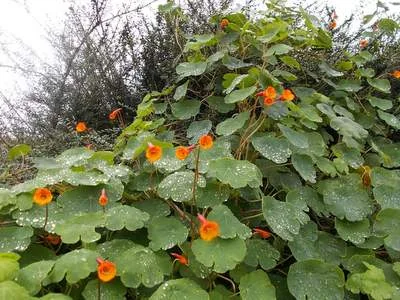
This member of the Tropaeolaceae family was given this name by Robert Sweet in 1828. It is found in Chile, growing in a well drained but rich soil with some water and some to lots of sun. The tubers can grow to 2,5 centimetres in diameter, the entire plant to one or even three metres in height. The flowers are orange-yellow to red, brownish violet and yellow.
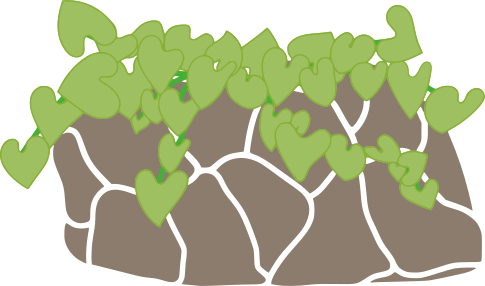
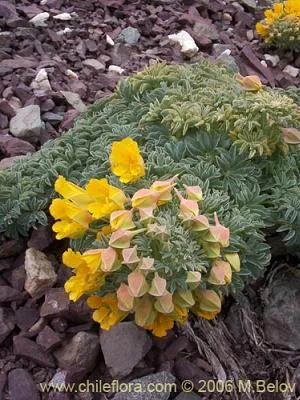
The genera name is the diminutive of trophy; given by Carl Linnaeus, who chose the genus name because the plant reminded him of an ancient custom: After victory in battle, the Romans erected a trophy pole (or tropaeum, from the Greek tropaion, source of English "trophy") on which the vanquished foe's armour and weapons were hung. The species is named for the three colours in the flower. This is a winter-grower. The leaves by M. Teresa Eyzaguirre, Fundacionphilippi.cl. More pale flowers from Gardenia.net.
Flower
Orange - Red - Yellow / Brownish-Violet
Soil
Rich
Water
Medium
Sun
Medium - Maximum