PELARGONIUM ANTIDYSENTERICUM
Author:
Vincenz Franz Kosteletzky, 1896
Family:
GERANIACEAE
Origin:
Elevation:
Publisher:
Allg. Med.-Pharm. Fl. 5: 1896 (1836)
Collection number:
placeholder
Thickness:
14 Centimetres
Height:
1,5 Meters
Propagate:
Seeds/Cuttings
CITES:
Synonyms:
Geraniospermum antidysentericum, Kuntze.
Jenkinsonia antidysenterica Echlon & Zeyhher, 1835.
Pelargonium antidysentericum subsp. inerme, Scheltema.
Pelargonium antidysentericum subsp. zonale, Scheltema.
By mistake?: Pelargonium antidysenterica
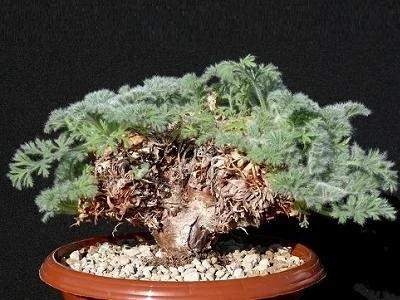
This member of the Geraniaceae family was given this name by Vincenz Franz Kosteletzky in 1896. It is found in South Africa and Namibia, growing in well-drained soil with some water and lots of sun. The caudex can grow to fourteen centimetres in diameter and the plant grow up to one and a half meters in height. The flowers are purple, and the plant can be reproduced both by seeds and cuttings.
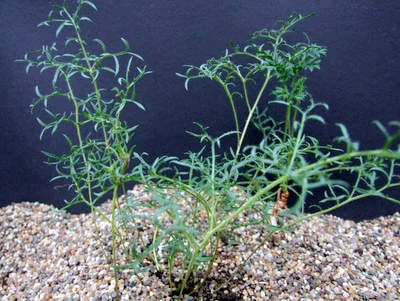
The genera name from Greek; pelargos; 'stork' for the ripening fruits, which resembles the bills of storks. The species name means 'anti-dysentery', referring to its medicinal properties for treating this intestinal infection. There are three distinct forms; Pelargonium antidysentericum ssp. antidysentericum, Pelargonium antidysentericum ssp. zonale, with have round leaves. P. a. ssp. inerme have less serrated leaves. This might be a winter-grower. P. a. ssp. antidysentericum by Matija Strlic, Pelargonium.si. P. a. zonale flower by Matija Strlic, Pelargonium.si.
Flower
Purple
Soil
Mix
Water
Medium
Sun
Medium