PACHYPODIUM SAUNDERSII
Author:
Nicholas Edward Brown, 1892
Family:
APOCYNACEAE
Origin:
Elevation:
Publisher:
N. E. Br. (1892). In: Bull. Misc. Inform. Kew 1892: 126.
Collection number:
placeholder
Thickness:
5 0 Centimetres
Height:
1 Meter
Propagate:
Seeds
CITES:
Synonyms:
Pachypodium lealii subsp. saundersii, G.D.Rowley.
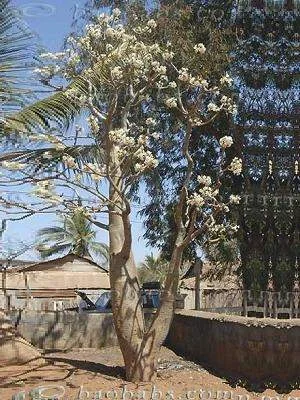
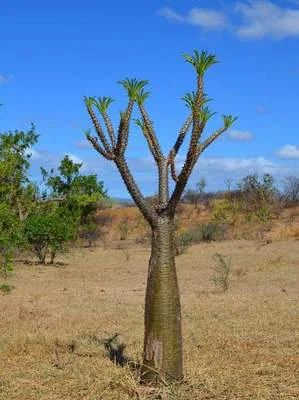
This member of the Apocynaceae family was first described by Nicholas Edward Brown in 1892. It is found in southern Africa, growing in summertime in a well-drained soil with some water. It can do with some sun and stands lots of sun. The caudex grow 50 centimetres, the stems reaches one meter and a half. The flowers are white to light rose, and it can only be reproduced by seeds.
The genera name from Greek; pachys; 'thick' and Greek podion; 'small foot' for the thick caudiciform trunk, formed by some species. The species is named after the botanist who found it in South Africa in the late 1800's: Charles Saunders. I found two populations in northern Swaziland. Both on exposed sandstone, and reaching 50 centimetres in diameter for the caudex. The flowers were light rose. The fruits. The origin in northern Swaziland. The flowers are a bit rose or pink. Photo by Ferdinand Poilodan. This is how it look a bit larger in culture. Large plant in Kirstenbosch BG, ZA.
Flower
White - Light Rose
Soil
Mix
Water
Medium
Sun
Medium