MACLEANIA RUPESTRIS
Author:
Albert Charles Smith, 1935
Family:
ERICACEAE
Origin:
Elevation:
Publisher:
A. C. Sm. (1935). In: Phytologia 1: 131.
Collection number:
placeholder
Thickness:
100 Centimetres
Height:
60-600 Centimetres
Propagate:
Seeds/Cuttings
CITES:
Synonyms:
Thibaudia rupestris, Kunth, 1819.
Thibaudia nitida, Kunth, 1819.
Psammisia rupestris, Klotzsch, 1851.
Psammisia nitida, Klotzsch, 1851.
Psammisia glabra Klotzsch, 1851.
Show more (19)
Psammisia costaricensis, Klotzsch,1851.
Psammisia alpicola, Klotzsch 1851.
Macleania turrialbana, Donn. Sm. 1899.
Macleania trianae, Hoerold, 1909.
Macleania sodiroi, Hoerold, 1909.
Macleania pilgeriana, Hoerold, 1909.
Macleania nitida, Hoerold, 1909.
Macleania glabra, Hoerold, 1909.
Macleania elliptica, Hoerold, 1909.
Macleania ecuadorensis, Hoerold, 1909.
Macleania costaricensis, Hoerold, 1909.
Macleania alpicola, Hoerold, 1909.
Macleania robusta, Rusby, 1920.
Macleania irazuensis, S.F. Blake, 1922.
Macleania euryphylla, S.F. Blake, 1924.
Macleania attenuata, Fedtsch & Basil. 1926.
Macleania reducta, A.C. Sm, 1932.
Macleania racemosa, Cufod. 1933.
Cavendishia nitida, A.C. Sm. 1935.
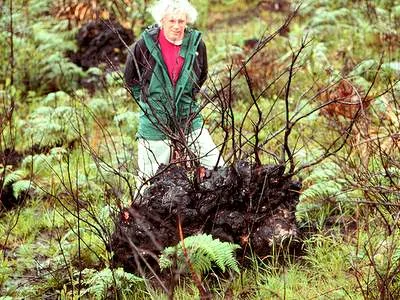
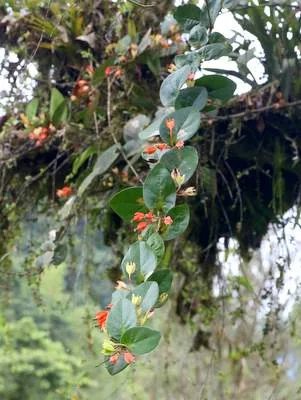
This member of the Ericaceae family was given this name by Albert Charles Smith in 1935. It is found in Bolivia, Colombia, Costa Rica, Ecuador, Nicaragua, Panama, Peru and Venezuela, growing as an epiphyte on trees or rocks, or in a well drained soil with some to lots of water and little to lots of sun. The caudex can grow to 100 centimetres in diameter, the entire plant from 60 to 200 centimetres in height with additional six metres vines, or as a little tree! The flowers are red with a slim white edge.
The genera name after John Maclean, 19th century Scottish merchant who exported plants from Lima, Peru. The species name from Latin; rupes; rock and the ending means; 'living among'. The flowers by Alfredo F. Fuentes, Tropicos.com.
Flower
Red / White
Soil
Mix - Epiphytic - Rocks
Water
Medium - Maximum
Sun
Minimum - Maximum