LECANOPTERIS CARNOSA
Author:
Carl Ludwig von Blume, 1828
Family:
POLYPODIACEAE
Origin:
Elevation:
Publisher:
Blume. (1828). In: Enum. Pl. Javae 2: 120.
Collection number:
placeholder
Thickness:
3-4 Centimetres, Clusters 50 Centimetres
Height:
20 Centimetres
Propagate:
Spores/Rhizomes
CITES:
Synonyms:
Onychium carnosum Reinw. 1828.
Pleopeltis carnosa, Alderw. 1909.
Lecanopteris pumila Carl Ludwig von Blume, 1829.
Polypodium carnosum, Christ.
Polypodium lecanopteris, Mett.
Show more (2)
Polypodium patelliferum, Burck.
Onychium carnosum, Reinw.
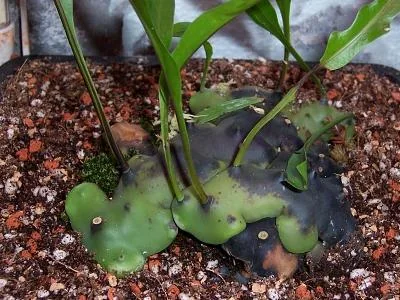
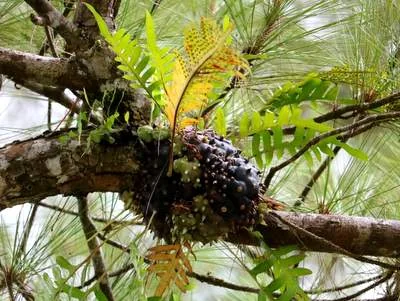
This member of the Polypodiaceae family was given this name by Carl Ludwig von Blume in 1828. It is found in Indonesia, Malaysia and the Philippines, growing on the branches of trees with some to lots of water and little to some sun. The rhizomes can grow from three to four centimetres in diameter, forming clusters of 50 centimetres. The leaves up to 25 centimetres long.
The genera name after some Lecan, but I fail to figure which one, or perhaps Greek lekane; 'bowl', and Latin pteris; 'fern'. The genera name Lecanopteris was introduced by Caspar Georg Reinwardt published in Flora 8, 1825. The species name from Latin carne; 'flesh'. It is a ant fern, and I had no doubt when I climbed the trees they was in! The rhizomes are full of canals, forming the perfect ant nest. But it all start with a tiny dot. Will experience quite some draught through half a year.
Flower
No, Spores
Soil
No; Epiphytic
Water
Medium - Maximum
Sun
Minimum - Medium