KLEINIA GRANTII
Author:
Joseph Dalton Hooker, 1899
Family:
ASTERACEAE
Origin:
Burundi, Democratic Republic of the Congo, Eritrea, Ethiopia, Guinea, Kenya, Mali, Rwanda, Somalia, Tanzania, Zambia
Elevation:
Publisher:
Hook. fil. (1899). In: Bot. Mag. T. 7691.
Collection number:
placeholder
Thickness:
3,5 Centimetres
Height:
2 Meters
Propagate:
Seeds/Cuttings
CITES:
Synonyms:
Might be: Senecio grantii, Bernardus Joannes Maria Zonneveld, 2004.
Notonia grantii, Oliv. & Hiern, 1877.
Kleinia coccinea, A.Berger.
Notonia bequaertii, De Wild.
Notonia coccinea, Oliv. & Hiern.
Show more (7)
Notoniopsis coccinea, B.Nord.
Notoniopsis grantii, B.Nord.
Senecio coccineiflorus, G.D.Rowley.
Senecio coccineus, H.Jacobsen.
Senecio longipes, Baker.
Senecio phellorrhizus, Muschl.
Senecio sempervivus subsp. grantii, G.D.Rowley.
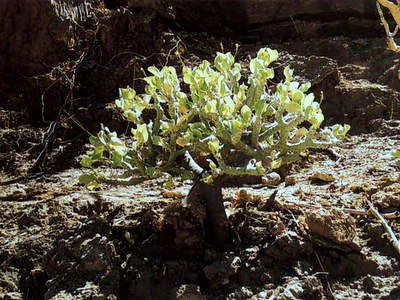
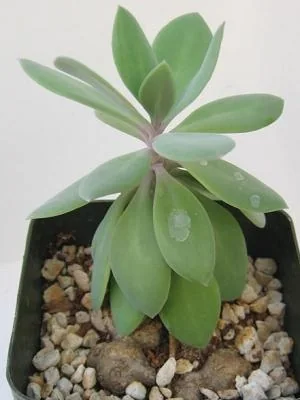
This member of the Asteraceae family was described by Joseph Dalton Hooker in 1899. It's found in the eastern and western part of Africa, growing in a well-drained soil with some water and lots of sun. The ginger-like roots grow into clusters of three to four centimetres in diameter rhizomes and covers several square-meters. The flowers are orange to red, and it can be reproduced by seed, cuttings and leaves. The genera is named after the German zoologist, Dr Klein,1685-1759. The species after Capt. James Augustus Grant, 1827-1892, a Scottish explorer and plant collector. Highly poison. A non-traceably toxin, ruining the liver. I bought mine at a floweriest, calling it ginger! I didn't get a photo of the flower the first year, as I "wasted" my time in Mexico at that time.
Flower
Orange - Red
Soil
Grit
Water
Medium
Sun
Medium