JATROPHA PODAGRICA
Author:
William Jackson Hooker, 1848
Family:
EUPHORBIACEAE
Origin:
Elevation:
Publisher:
Bot. Mag. 74: t. 4376 (1848)
Collection number:
placeholder
Thickness:
20 Centimetres
Height:
40-200 Centimetres
Propagate:
Seeds/(Cuttings)
CITES:
Synonyms:
–
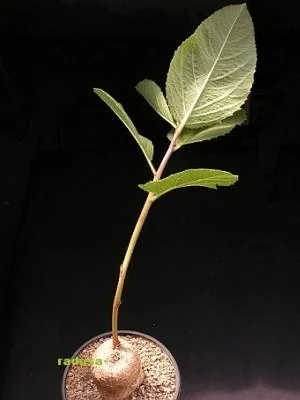
This member of the Euphorbiaceae family was first described by William Jackson Hooker in 1848. It's found in central America. It preferring good rich soil, but can grow in grit. It need some water and some to lots of sun. The caudex will grow up to 20 centimetres in diameter, the stems to two meters - or even higher in culture. The flowers are red, the female flower starts, but it can self-pollinate. Apparently, it's not possible to make cuttings forming a caudex. First, the centred female flowers will open, then the many surrounding male flowers. It can self fertilize. The seedpods will pop when ripen, throwing the two to six seeds several metres away. Can be sown right away, and within a week, 100% will grow - for me.
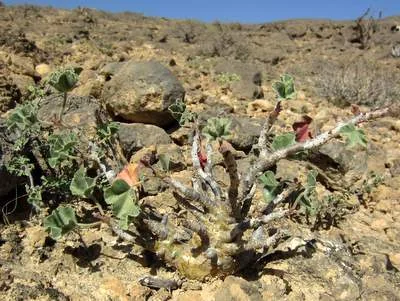
The genera name from the Greek words ἰατρός; iatros, meaning 'physician', and τροφή; trophe meaning 'nutrition', as to medicinal uses. The species name means 'suffering from podagra (gout)' as the stem is swollen. This collumn is wild plants, found in Guatemala.
Flower
Red
Soil
Rich - Grit
Water
Medium
Sun
Medium - Maximum