IPOMOEA PELLITA
Author:
Hans Gottfried Hallier, 1893
Family:
CONVOLVULACEAE
Origin:
Elevation:
Publisher:
Hallier fil. (1894). In: Bot. Jahrb. Syst. 18: 130.
Collection number:
placeholder
Thickness:
8 Centimetres
Height:
200 Centimetres
Propagate:
Seeds
CITES:
Synonyms:
Ipomoea ovata, E. Mey. ex Rendle.
Might be: Ipomoea ovata var. pellita, Baker.
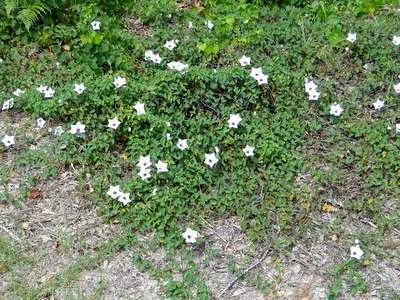
This member of the Convolvulaceae family was given this name by Hans Gottfried Hallier in 1893. It is found in Eswatini, Lesotho and eastern South Africa, growing in a well drained soil with some water and lots of sun. The caudex can grow to eight centimetres or more in diameter, the vines to 200 centimetres in height. The flowers are magenta. The generic name Ipomoea is derived from the Greek ἴψ, ἰπός; íps, ipós, meaning 'woodworm', and ὅμοιος; hómoios, meaning 'resembling'. It referring to their twining habit. The species name is from Latin, meaning "covered with skin", possibly referring to the leaves, covered in hairs. The hairy leave by Peter Warren, Inaturalist.org. Another wild plant by Peter Warren, Inaturalist.org.
Flower
Magenta
Soil
Mix
Water
Medium
Sun
Maximum