IPOMOEA CAIRICA
Author:
Robert Sweet, 1826
Family:
CONVOLVULACEAE
Origin:
Angola, Bangladesh, Botswana, Burundi, Cameroon, China, Congo, Democratic Republic of the Congo, Equatorial Guinea, Eritrea, Eswatini, Ethiopia, Gabon, Gambia, Ghana, Guinea, Guinea-Bissau, Gulf of Guinea Islands, India, Ivory Coast, Kenya, Laos, Liberia, Madagascar, Malawi, Mauritius, Mozambique, Myanmar, Nansei-shoto, Nepal, Nigeria, Ogasawara-shoto, Oman, Palestine, Réunion, Rodrigues, Rwanda, Senegal, Sierra Leone, Somalia, South Africa, South China Sea, Sri Lanka, Sudan, Taiwan, Tanzania, Thailand, Togo, Uganda, Vietnam, West Himalaya, Yemen, Zambia, Zimbabwe
Elevation:
Publisher:
Sweet. (1826). In: Hort. Brit., Ed. 1, 287.
Collection number:
placeholder
Thickness:
5 Centimetres
Height:
2-4 Meters
Propagate:
Seeds
CITES:
Synonyms:
Convolvulus cairicus, Carl Linnaeus, 1759.
Ipomoea palmata Forssk. 1775.
Ipomoea senegalensi Lam. 1791.
Ipomoea pentaphylla Cav. 1794.
Convolvulus tuberculatus Desr. 1792.
Show more (8)
Ipomoea stipulacea Jacq. 1797.
Ipomoea cavanillesii Roem. & Schult, 1819.
Convolvulus limphaticus Vell. 1825.
Batatas senegalensis G. Don, 1837.
Batatas cavanillesii,G. Don, 1838.
Ipomoea tuberculata Roem. & Schult. 1819.
Ipomoea vesiculosa P. Beauv. 1819. I pomoea funaria Larrañaga, 1923.
Exocroa egyptiaca, Raf. 1838.
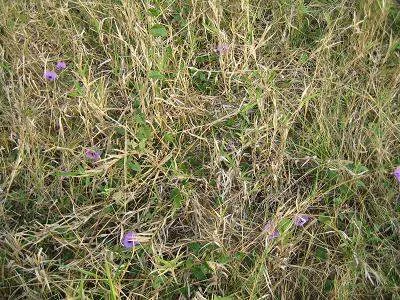
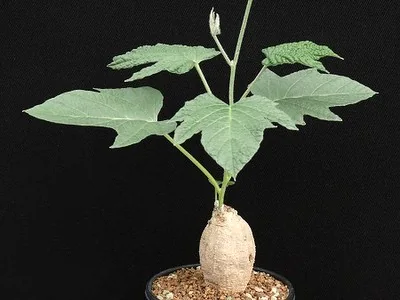
This member of the Convolvulaceae family was given this name by Robert Sweet in 1826. It is found all the way from the tropical Africa throughout Asia, and have furthermore been spread in Australia, southern North America and other warm places. It preferring a rich but well drained soil with some to much water and some sun. The caudex can grow to five centimetres in diameter, and rather long. The vines can reach two to five meters. The large flowers are lavender. The generic name Ipomoea is derived from the Greek ἴψ, ἰπός; íps, ipós, meaning 'woodworm', and ὅμοιος; hómoios, meaning 'resembling'. It referring to their twining habit. The species name means 'from Cairo'. Photo by Sheldon Navie, Keyserver.lucidcentral.org.
Flower
Lavender
Soil
Rich
Water
Medium - Maximum
Sun
Medium