HYDNOPHYTUM MOSELEYANUM
Author:
Odoardo Beccari, 1885
Family:
RUBIACEAE
Origin:
Elevation:
Publisher:
Malesia 2: 125 (1884)
Collection number:
placeholder
Thickness:
38 Centimetres
Height:
100 Centimetres
Propagate:
Seeds/Cuttings
CITES:
Synonyms:
Hydnophytum forbesii, Joseph Dalton Hooker, 1892.
Hydnophytum agatifolium, Valeton
Hydnophytum brachycladum, Merr.
Hydnophytum brassii, S.Moore
Hydnophytum camporum, S.Moore
Show more (19)
Hydnophytum capitatum, Valeton
Hydnophytum crassifolium, Becc.
Hydnophytum cuneatum, Valeton
Hydnophytum laurifolium, Warb.
Hydnophytum longistylum, Becc.
Hydnophytum loranthifolium, Becc.
Hydnophytum macrophyllum, Warb.
Hydnophytum mindanaense, Elmer
Hydnophytum montanum, Scheff.
Hydnophytum moseleyanum var. teysmannii, Becc.
Hydnophytum oblongum, Becc.
Hydnophytum papuanum, Becc.
Hydnophytum philippinense, Becc.
Hydnophytum robustum, Rech.
Hydnophytum stewartii, Fosberg
Hydnophytum subfalcifolium, Valeton
Hydnophytum subrotundum, Valeton
Lasiostoma loranthifolium, Benth.
Lasiostoma oblongum, Benth.
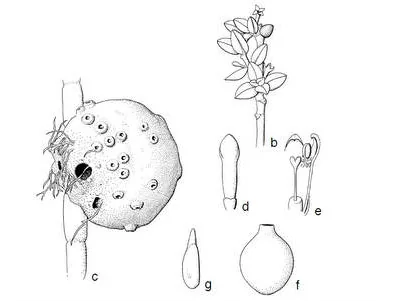
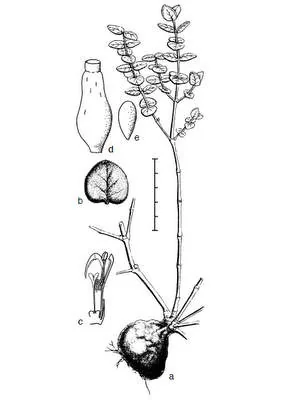
This member of the Rubiaceae family was given this name by Odoardo Beccari in 1885. It is found in north-eastern Australia and in Papua New Guinea, growing on the branches of trees as a epiphyte. The caudex can grow to 38 centimetres, the branches reach one meter with small white flowers and small orange berries. H. moseleyanum have 3-4 pairs of veins in their slightly succulent, silverish and smooth caudex without ridges, ant entrances spread all over the lover half of the caudex, flowers 4-5 millimetres. Often confused with H. formicarum, which have 6-12 pairs of veins in their leathery leaves, brownish and rough caudex with ridges, ant entrances only along the soil line, flowers 3-4 millimetres. Sub-family: Rubioideae. Tibe: Psychotrieae. Sub-tribe: Hydnophytinae. In my experience, the seeds should be sown within a week after opening the fresh fruit.
The genera name after Greek hydnon meaning 'tuber' and phyton meaning 'plant', after the swollen branches. The species name after the capital of Papay New Guinea; Port Moresby. It needs rather high humidity. Hydnophyttnae KEY. Fresh fruit; 5 millimetres long.
Flower
White
Soil
Epiphytic
Water
Maximum
Sun
Medium