EUPHORBIA CAPUT-MEDUSAE
Author:
Carl Linnaeus, 1753
Family:
EUPHORBIACEAE
Origin:
Elevation:
Publisher:
Sp. Pl.: 452 (1753)
Collection number:
placeholder
Thickness:
15 Centimetres
Height:
30 Centimetres
Propagate:
Seeds/Cuttings
CITES:
Synonyms:
Euphorbia commelini, DC.
Euphorbia fructus-pini, Mill.
Euphorbia geminata, Marloth ex A.C.White, R.A.Dyer & B.Sloane.
Euphorbia parvimamma, Boiss.
Euphorbia tessellata, Steud.
Show more (3)
Medusea fructus-pini, Haw.
Medusea major, Haw.
Medusea tessellata, Haw.
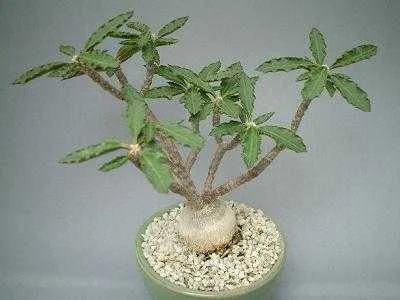
This member of the Euphorbiaceae family was described by Carl Linnaeus in 1753. It is found in the western part of South Africa's Cape Province. It grow in sandy soils and do fine in any well drained mix. The stem can grow to fifteen centimetres in diameter, the whole plant up to one meter in diameter. The flowers are crème coloured or reddish.
The genera name; Euphorbia dates back to the first century BC, where King Juba II of Mauritania used it in a reference to his doctor, Euphorbos, and that name was kept as a generic name by Carl von Linnaeus. The species name means 'the head of Medusa' It might be a winter grower, but can be grown in summer.
Flower
Crème Colour - Reddish
Soil
Mix
Water
Minimum - Medium
Sun
Medium - Maximum