ERIOSPERMUM ZEYHERI
Author:
Robert Allen Dyer, 1954
Family:
ERIOSPERMACEAE
Origin:
Elevation:
Publisher:
Bothalia 6: 444 (1954)
Collection number:
placeholder
Thickness:
8 Centimetres
Height:
15 Centimetres
Propagate:
Seeds
CITES:
Synonyms:
–
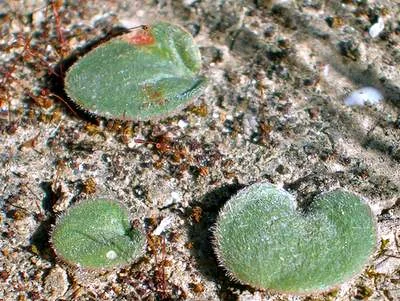
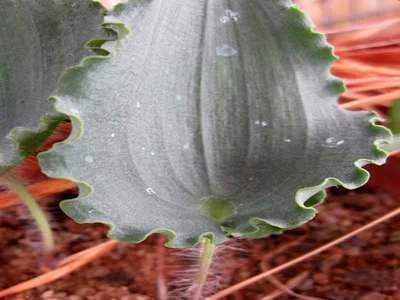
This member of the Eriospermaceae family was described by Robert Allen Dyer in 1954. It is found in central and southern South Africa. The caudex can grow to eight centimetres in diameter, the leaves up to fifteen centimetres. The flowers are white with light maroon stripes. It is growing in grit with some water and some sun. I really don't know much about this plant. The Royal Botanical Garden of Kiew: The family comprises a single genus, with 102 species according to the recent revision, found only in Africa south of the Sahara, with a concentration in the western Cape Province of South Africa. It is easily recognised in fruit by the densely hairy seeds, and also by the bristly neck of old leaf-sheaths and leaves with a petiole-like base. It has little economic, medicinal or horticultural value but is botanically interesting for being a very isolated and advanced family.
The genera name from Greek; erion; 'woll' and Greek sperma; 'seed'. The species name after Karl L. P. Zeyher, 1799-1858, a German naturalist and botanical explorer in South Africa. *) Accordantly to the latest taxonomic system; APG IV 2016, Eriospermaceae is now part of the Asparagaceae. This is a winter-grower. Wild plants from Soilandroots.com.
Flower
White / Maroon
Soil
Grit
Water
Medium
Sun
Medium