CISSUS TUBEROSA
Author:
Augustin Pyramus de Candolle, 1824
Family:
VITACEAE
Origin:
Elevation:
Publisher:
Kunth. (1821). In: Nov. Gen. Et Sp. 5: 222.
Collection number:
placeholder
Thickness:
20 Centimetres
Height:
5 Meters
Propagate:
Seeds/Cuttings
CITES:
Synonyms:
Cissus tiliacea, Kunth, 1822.
Vitis tuberosa, Helmsley, 1879.
Cissus arsenii, Standl.
Cissus brevicaulis, Gentry.
Cissus pallidiflora, Lundell
Show more (4)
Cissus sicyoides f. tiliacea, Planch.
Cissus sinaloae, Standl.
Cissus subtruncata, Rose
Vitis tiliacea, Hemsl.
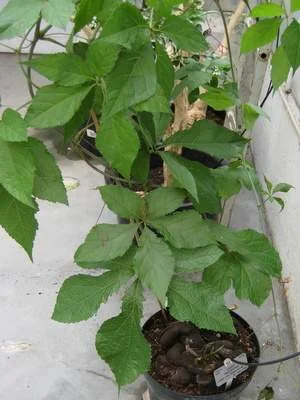
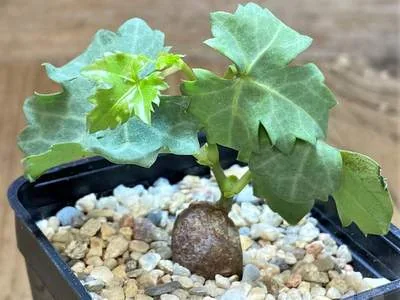
The "eye" forms the root, don't do as I, but stick it in the soil! It actually formed a root under ground as well. Augustin Pyramus de Candolle, 1824 VITACEAE Guatemala, Mexico, Nicaragua Mix Medium Medium 20 Centimetres 5 Meters Green Seeds/Cuttings - Cissus tiliacea, Kunth, 1822. Vitis tuberosa, Helmsley, 1879. Cissus arsenii, Standl. Cissus brevicaulis, Gentry. Cissus pallidiflora, Lundell Cissus sicyoides f. tiliacea, Planch. Cissus sinaloae, Standl. Cissus subtruncata, Rose Vitis tiliacea, Hemsl. Described by Augustin Pyramus de Candolle in 1824. This Vitaceae originates from Mexico, Guatemala and Nicaragua, where it lives among the rocks. A bit of water and some sun, and the small green flowers will appear. It can be reproduced both by "air-bulbs" cuttings and seeds. The caudex will grow to 20 centimetres in diameter, and several meters long, lying on the ground. The vines will reach for up to five meters. It might have been described by Knuth as Cissus tiliacea in 1821, but is considered to be the same species, and the well-known name tuberosa remains.
The generic name is derived from the Greek word κισσος kissos, meaning 'ivy'. The species name means 'a bulbous plant'. Also classicified as Ampelidaceae.
The flower by Bruce Brethauer, Flickr.com.
Flower
Green
Soil
Mix
Water
Medium
Sun
Medium