CISSUS TRIFOLIATA
Author:
–
Family:
–
Origin:
–
Elevation:
Publisher:
L. (1759). In: Sp. Pl. Ed. II. 170.
Collection number:
placeholder
Thickness:
–
Height:
–
Propagate:
–
CITES:
Synonyms:
Sicyos trifoliatus, Carl von Linnaeus, 1753
Cissus acida, L. 1762
Cissus acutifolia, Poir. 1810
Cissus carnifolia Urb. & Ekman 1929
Cissus crenata Vahl 1794
Show more (6)
Cissus incisa Des Moul.ex S.Watson 1878
Cissus obtusifolia, Lam. 1783
Cissus parvifolia, Salisb. 1796
Kemoxis acida Raf. 1838
Vitis incisa, Nutt.1838
Vitis trifoliata, Baker, 1871
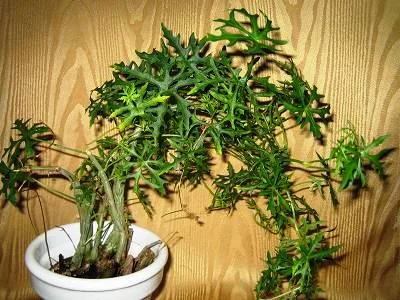
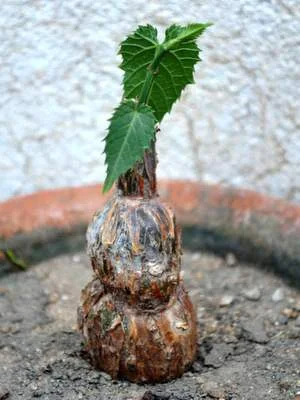
This member of the Vitaceae family was given this name by Carl Linnaeus in either 1759 or 1762. It is found in Southern US down through central America and surrounding islands, growing in a pretty much any soil with some to lots of water and some to full sun. The caudex can grow to five centimetres or more in diameter, the entire plant to fifteen centimetres in height, when ground covering. If it find something to climb on, it can reach ten metres.. The flowers are greenish to creamy yellow, while the poisonous berries are dark purple to black. Contact with the plant can cause dermatitis in those with sensitive skin, and it is used in medicine. The generic name is derived from the Greek word κισσος kissos, meaning 'ivy'. The species name after the palmately tri-lobed leaves. Ripe berries from Asergeev.com.
Flower
–
Soil
–
Water
–
Sun
–