CHENOPODIUM MULTIFIDUM
Author:
Carl Linnaeus, 1753
Family:
CHENOPODIACEAE
Origin:
Elevation:
Publisher:
Mosyakin, & Clemants. (2002). In: Ukrayins’k. Bot. Zhurn., N. S. 59: 382.
Collection number:
placeholder
Thickness:
5 Centimetres
Height:
20 (40) Centimetres
Propagate:
Seeds/Cuttings
CITES:
Synonyms:
Dysphania multifida, Mosyakin & Clemants, 2002.
Ambrina pinnatisecta, Spach, 1836.
Ambrina tenuis, Moq.
Atriplex multifida, Crantz
Blitum tenue, Moq.
Show more (13)
Chenopodium citriodorum, Steud.
Chenopodium multifidum f. intermedium, Aellen.
Chenopodium multifidum f. latisectum, Bonte & Aellen.
Chenopodium multifidum var. microcarpa, Reiche
Chenopodium multifidum f. spathulatum, Aellen.
Chenopodium payco, Molina.
Chenopodium tenue, Colla.
Dysphania microcarpa, Mosyakin & Clemants.
Orthosporum multifidum, Kostel.
Roubieva microcarpa, Phil.
Roubieva multifida, Moq. 1834
Teloxys multifida, W.A.Weber, 1985.
Herniaria payco, Molina
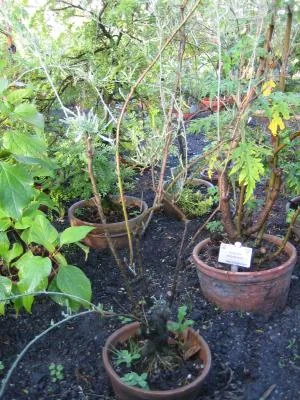
This member of the Chenopodiaceae family was describes by Carl Linnaeus in 1753. It is found in Argentina, Bolivia, southern Brazil, Chile, Peru and Uruguay. It grows in well drained soil with little to some water and lots of sun. The caudex will grow to five centimetres, the annual stems will crawl for 40 centimetres. The flowers are greenish, and it can be reproduced by cuttings as well.
The genera name from the Cherangani Hills in Kenya. The species name means 'many-cleft, divided into many segments' for the branches. *) Accordantly to the latest taxonomic system; APG IV 2016, Chenopodiaceae is now part of the Amaranthaceae. According to Carlos Hernandez, this is actually Chenopodium haumanii, Ulbrich,1934
Flower
Green / White
Soil
Mix
Water
Medium
Sun
Maximum
Similar plants