CEROPEGIA (LINEARIS) WOODII
Author:
Friedrich R. Rudolf Schlechter, 1894
Family:
ASCLEPIADACEAE
Origin:
Elevation:
Publisher:
Schltr. (1894). In: Bot. Jahrb. Syst. 18: Beibl. N 45 34.
Collection number:
placeholder
Thickness:
5-10 Centimetres
Height:
2 Meters
Propagate:
Seeds/Cuttings
CITES:
Synonyms:
Might be: Ceropegia linearis var. woodii, Herbert Franz Josef Huber, 1957.
Ceropegia barbertonensis, N.E.Br.
Ceropegia euryacme, Schltr.
Ceropegia hastata N.E.Br.
Ceropegia leptocarpa, Schltr.
Show more (1)
Ceropegia schoenlandii, N.E.Br.
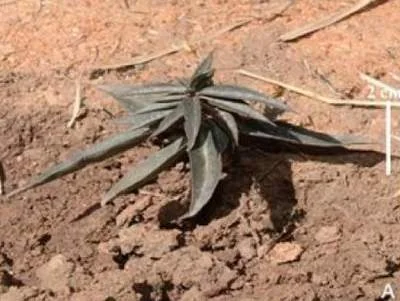
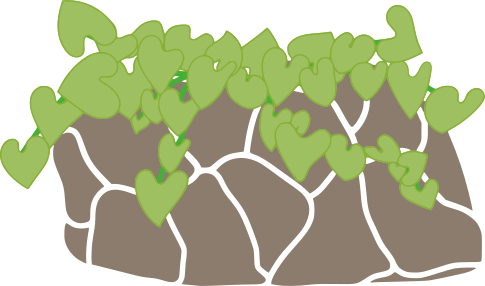
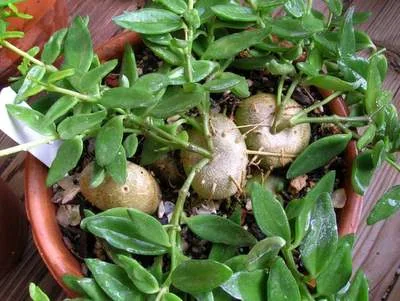
This member of the Asclepiadaceae* family was described by Friedrich Richard Rudolf Schlechter in 1894. It's found in Es watini, Mozambique and Zimbabwe, growing in a well-drained soil with little water and some sun. The bulbs can grow to five centimetres, and one clone over ten centimetres in diameter. The vines are more than two meters long. The flowers are white/pink, and it can be reproduced both by cuttings, seeds and bulbs. The leaves will get thicker when kept dry.
The genera name is from the Greek word keropegion meaning 'candelabrum', because Linnaeus thought that the flowers looked like candles. The species name after Dr. John Medley Wood, 1827-1915, a British botanist. *)Accordantly to the latest taxonomic system; APG IV 2016, Asclepiadaceae is now part of the Apocynaceae. Hildor Hoffmann's photo of the flower of the "Durban-clone".
Flower
White / Pink
Soil
Mix
Water
Medium
Sun
Medium