CEROPEGIA HIRSUTA
Author:
Robert Wight & G.A.W: Arnott, 1834
Family:
ASCLEPIADACEAE
Origin:
Elevation:
Publisher:
Wight & Arn. (1834). In: Contrib. Bot. India 30.
Collection number:
placeholder
Thickness:
3 Centimetres
Height:
3-4 Metres
Propagate:
Seeds/Cuttings
CITES:
Synonyms:
Ceropegia hirsuta var. jacquemontiana, Hook.f.
Ceropegia hirsuta var. ophiocephala, Hook.f.
Ceropegia hirsuta var. stenophylla, Hook.f.
Ceropegia hispida, Blatt. & McCann.
Ceropegia jacquemontiana, Decne.
Show more (1)
Ceropegia ophiocephala, Dalzell.
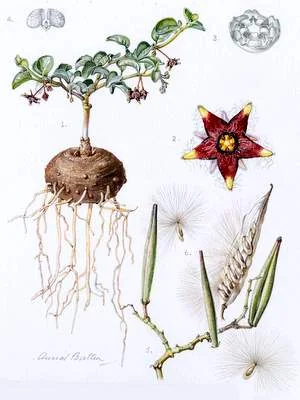
This member of the Asclepiadaceae* family was described by Robert Wight and George Arnott Walker Arnott in 1844. It is found in the very drier parts of the entire Deecan as well as in Gujarat and Rajastan State, Western India and in Thailand. It grows in a stony gravely soil quite porus, black soil is best.Very rare, endemic species. It preferring a well drained soil with little water and some sun. It has a coarse hirsute, up to one centimetre long, generally un-branched elimleer. The tuber is spheriate or sub spheriate. The leaves are membranous, ovate-lanceolate with a rounded lease. It has lots of flowers. Lateral umbrellate cymes are pedunculate, corolla 3-5,5 centimetres long, light green and purple spotted, tulees, up to 4 centimetres long, are curved, funnel shaped, forming a rounded head, eiliate along the margins. Pale yellow on the outside, purple and hairy within. Flowering and fruiting from July to November.
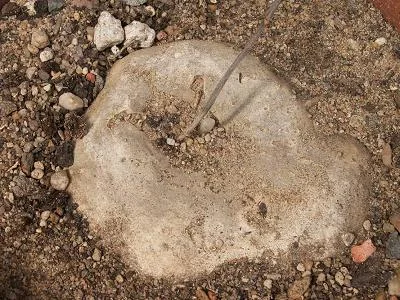
The genera name is from the Greek word keropegion meaning 'candelabrum', because Linnaeus thought that the flowers looked like candles. The species name mean 'having long distinct hairs, rough, hairy'. *)Accordantly to the latest taxonomic system; APG IV 2016, Asclepiadaceae is now part of the Apocynaceae. Photo by: Soumen Aditya.
Flower
Pale Yellow
Soil
Mix
Water
Minimum
Sun
Medium