BURSERA FAGAROIDES
Author:
Heinrich Gustav Adolf Engler, 1883
Family:
BURSERACEAE
Origin:
Elevation:
Publisher:
Engl. (1883). In: Monogr. Phan. [DC.] 4: 48.
Collection number:
placeholder
Thickness:
30 Centimetres
Height:
8 Meters
Propagate:
Seeds/Cuttings
CITES:
Synonyms:
Bursera covillei, Engl. - and many more below....
This member of the Burseraceae family was described by Heinrich Gustav Adolf Engler in 1883.
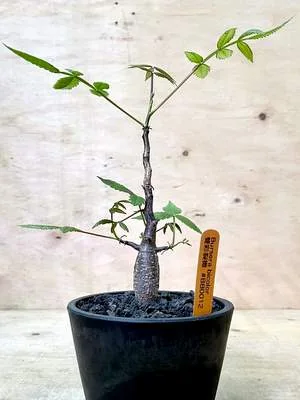
It is found in the north-western part of Mexico, and up to Arizona. It is growing in well-drained soil with little water and lots of sun. The stem can grow to 30 centimetres or more in diameter, and it will reach up to eight meters in height. The flowers are crème to greenish in colour, and the plant can be reproduced both by the small red seeds and by cuttings. The genera is n amed after: Joachim Burser, German/Danish botanist,1583-1639.
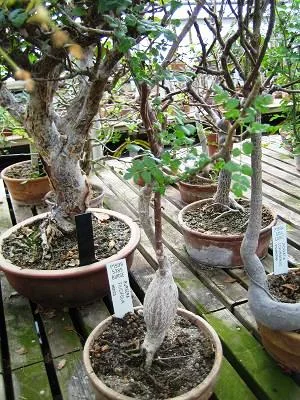
The species name means 'looking like Fagara' a genera in the Rutaceae. The fruits have a single large nut inside. The caudex of an older plant by Matthias Kist. Photo by Ivan Cupic who found it at Kibutz Yotvata, Israel. Probably this species. Synonyms: Bursera fagaroides f. bourgeauana, Engl. Bursera fagaroides f. crenulata, Engl. Bursera fagaroides f. elliptica, Engl. Bursera fagaroides var. elongata, McVaugh & Rzed. Bursera fagaroides var. purpusii, (Brandegee) McVaugh & Rzed. Bursera fagaroides f. ramosissima, Engl. Bursera lonchophylla, Sprague & L.Riley Bursera obovata, Turcz. Bursera odorata, Brandegee Bursera purpusii, Brandegee Bursera schaffneri, S.Watson Bursera tenuifolia, Rose Elaphrium covillei, Rose Elaphrium fagaroides, Kunth Elaphrium lonchophyllum, (Sprague & L.Riley) J.G.Ortega Elaphrium obovatum, (Turcz.) Rose Elaphrium odoratum, (Brandegee) Rose Elaphrium purpusii, (Brandegee) Rose Elaphrium schaffneri, (S.Watson) Rose Elaphrium tenuifolium, Rose Terebinthus odorata, (Brandegee) Rose Terebinthus schaffner i, (S.Watson) Rose Amyris fagaroides, Spreng. Amyris ventricosa, La Llave ex Schltdl.
Flower
Crème / Greenish
Soil
Mix
Water
Medium
Sun
Medium