BRYONIA DIOICA
Author:
Nicolaas Joseph von Jacquin, 1774
Family:
CUCURBITACEAE
Origin:
Albania, Algeria, Austria, Belgium, Bosnia and Herzegovina, Bulgaria, Croatia, Czechia, France, Germany, Great Britain, Greece, Hungary, Italy, Kazakhstan, Kosovo, Libya, Montenegro, Morocco, Netherlands, North Macedonia, Portugal, Serbia, Sicily, Slovakia, Slovenia, Spain, Switzerland, Tajikistan, Tunisia, Uzbekistan
Elevation:
Publisher:
Fl. austriac. 2:59, t. 199. 1774
Collection number:
placeholder
Thickness:
40 Centimetres
Height:
3 Metres
Propagate:
Seeds
CITES:
Synonyms:
Bryonia cretica subsp. dioica Tutin.
Bryonia alba L. 1753 =
Bryonia aspera, Steven ex Ledeb. 1812.
Bryonia monoeca, E.H.L.Krause
Bryonia nigra, Gilib.
Show more (1)
Bryonia vulgaris, Gueldenst. ex Ledeb.
The female flower by Bernard Gacongne.
The male flower by Bernard Gacongne.
The seeds by Bernard Gacongne Nicolaas Joseph von Jacquin, 1774 CUCURBITACEAE Albania, Algeria, Austria, Belgium, Bulgaria, Czechoslovakia, France, Germany, Great Britain, Greece, Hungary, Italy, Kazakhstan, Libya, Morocco, Netherlands, Portugal, Sicilia, Spain, Switzerland, Tadzhikistan, Tunisia, Uzbekistan, Yugoslavia Mix Medium - Maximum Medium - Maximum 40 Centimetres 3 Metres Greenish-White - Pale Yellow Seeds English Mandrake, Wild Vine, Wild Hops, Wild Nep, Tamus, Ladies' Seal, Tetterbury, Navet du diable, Bryonia cretica subsp. dioica Tutin. Bryonia alba L. 1753 = Bryonia aspera, Steven ex Ledeb. 1812. Bryonia monoeca, E.H.L.Krause Bryonia nigra, Gilib. Bryonia vulgaris, Gueldenst. ex Ledeb.
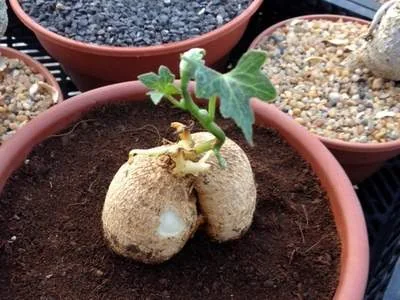
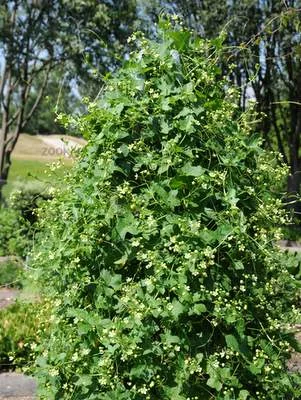
This dioecious member of the Cucurbitaceae family was described by Nicolaas Joseph von Jacquin in 1774. It is found in England, south- and middle Europe, northern Africa and western Asia. It preferring a neutral or basic, well drained soil with some to lots of water and some to lots of sun. The vines will grow to three meters and the flowers are white to pale yellow. The caudex reaches 40 centimetres in diameter.
The genre name; Bryonia from bryein, meaning luxuriant growth. The species name dioica is derived from Greek, meaning 'of two houses': Having separate staminate and pistillate plants; dioecious - and it is!
The fruits by Bernard Gacongne
Flower
Greenish-White - Pale Yellow
Soil
Mix
Water
Medium - Maximum
Sun
Medium - Maximum