BIGNONIA CAPREOLATA
Author:
Carl Linnaeus, 1753
Family:
BIGNONIACEAE
Origin:
Elevation:
Publisher:
L. (1753). In: Sp. Pl. 624.
Collection number:
placeholder
Thickness:
3 0 Centimetres
Height:
17 Meters
Propagate:
Seeds/Rhizome
CITES:
Synonyms:
Doxantha capreolata Miers, 1853.
Anisostichus capreolata,
Anisostichus crucigera.
Bignonia capreolata var. atrosanguinea, Hook.f.
Bignonia capreolata f. lutea, Heineke.
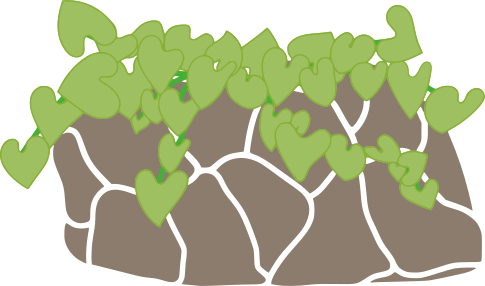
This member of the Bignoniaceae family was described by Carl Linnaeus in 1753. It is found in the south-eastern part of North America, growing in the forests' rich soil, with some water and little to lots of sun. The tubers will grow to 30 centimetres in diameter, the vines up to 17 meters. The flowers are dark orange out-side, yellow in-side. It can be reproduced both by seeds and tubers.
The genera name after Abbé J. P. Bigon, librarian to Louis XIV. The species name means 'having tendrils'.
Flower
Orange / Yellow
Soil
Peat
Water
Medium
Sun
Medium