BEAUCARNEA PURPUSII
Author:
Joseph Nelson Rose, 1906
Family:
NOLINACEAE
Origin:
Elevation:
Publisher:
Contr. U.S. Natl. Herb. 10: 89 (1906)
Collection number:
placeholder
Thickness:
1,5 Metres
Height:
4 Metres
Propagate:
Seeds
CITES:
Synonyms:
Tropicos: Beaucarnea stricta, Charles Lemaire, 1861
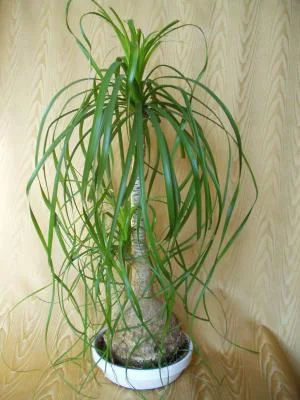
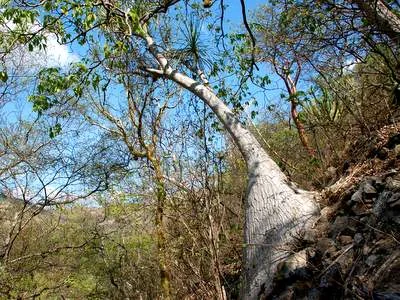
This member of the Nolinaceae family was given this name by Joseph Nelson Rose in 1906. It is found in central and south-western Mexico, growing in a well drained soil with little to some water and lots of sun. The caudex can grow to a meter and a half centimetres in diameter, the entire plant to four metres in height. The flowers are crème coloured. Mark E. Olsen write: Beaucarnea purpusii is restricted in its distribution to a few relatively high dry tropical localities. It is remarkable for being highly branched, often with many stout trunks and a relatively slender base. The leaves of this species are broader than those of Beaucarnea stricta, which grows nearby, and can accumulate along the branches in very dense, long-lived mats. Like the other dryland species of the clade, the bark of Beaucarnea purpusii is very thick and furrowed.
The genera name after Monsieur Beaucarne, a Belgian succulent plant grower who first collected flowers of the genera. The species name after Carl Albert Purpus, 1851-1941, a German plant collector in North America and Mexico. *) Accordantly to the latest taxonomic system; APG IV 2016, Nolinaceae is now part of the Asparagaceae.
Flower
Crème
Soil
Mix
Water
Minimum - Medium
Sun
Maximum