ARISTOLOCHIA FIMBRIATA
Author:
Chamisso & Schlechtendal,1832
Family:
ARISTOLOCHIACEAE
Origin:
Elevation:
Publisher:
Cham. (1832). In: Linnaea 7: 210. T. 6.
Collection number:
placeholder
Thickness:
25 Centimetres
Height:
2 Metres
Propagate:
Seeds/Cuttings
CITES:
Synonyms:
Howardia fimbriata, Johann Friedrich Klotzsch, 1859.
Aristolochia bonplandii, Ten.
Aristolochia ciliata, Hook.
Aristolochia ciliosa, Benth.
Aristolochia insignis, Verschaff.
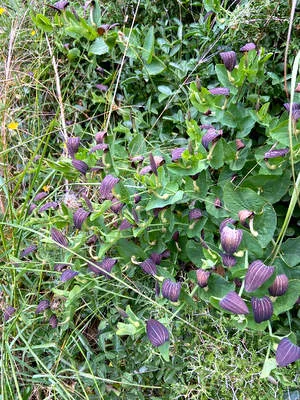
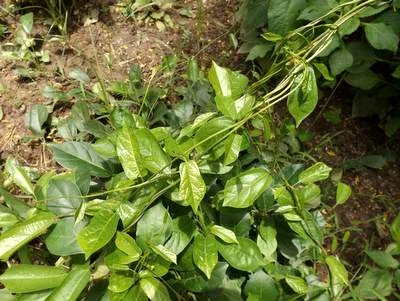
This member of the Aristolochiaceae family was given this name by Ludolf Karl Adelbert von Chamisso and Diederich Franz Leonhard von Schlechtendal in 1832. It is found in Argentina, Bolivia, Brazil, Uruguay and Paraguay, growing in a well drained but rather rich soil with some to lots of water and some sun. The swollen roots can grow to 25 centimetres in diameter, the non-climbing vines up to two metres in length. The flowers are greenish yellow and brown.. From Cambridge BG: " Aristolochias exhibit fascinating pollination mechanisms: The stench attracts insects into the inflated perianth tube which is lined with downward pointing hairs that form an impenetrable forest. The insect is prevented from escaping until the whole flower has collapsed. The insect then emerges covered in pollen to get duped once again and trapped in another flower and effect pollination".
The genera name originated from Latin Aristatus; 'awnes' for the awn-like leaf tips, OR, more likely: ' best birth'; as AristoTheophrastus describes it use at childbirth. The species name means 'fringed', like the flowers.
Flower
Brown / Greenish Yellow
Soil
Mix
Water
Medium - Maximum
Sun
Medium