ANREDERA VESICARIA
Author:
Carl Friedrich von Gaertner, 1807
Family:
BASELLACEAE
Origin:
Bahamas, Belize, Cayman Islands, Colombia, Costa Rica, Cuba, Dominican Republic, El Salvador, Guatemala, Haiti, Honduras, Jamaica, Leeward Islands, Mexico, Netherlands Antilles, Nicaragua, Panama, Puerto Rico, Trinidad and Tobago, United States, Venezuela, Windward Islands
Elevation:
Publisher:
C. F. Gaertn. (1807). In: Fruct. 3: 176. T. 213.
Collection number:
placeholder
Thickness:
3 Centimetres
Height:
8 Centimetres
Propagate:
Seeds/Cuttings/Airbulbs
CITES:
Synonyms:
Basella vesicaria, Lam., 1792.
Atriplex spicata, Stokes, 1812.
Beriesa baselloides, Steud., 1840.
Gomphrena volubilis, Blanco, 1837.
Anredera cumingii, Hassk., 1865.
Show more (7)
Anredera leptostachys,, Steenis, 1957.
Anredera scandens, Sm., 1818.
Anredera spicata, J.F.Gmel., 1791.
Anredera vesiculosa, Poir., 1810.
Boussingaultia leptostachya, Moq., 1849.
Clarisia volubilis, Abat, 1792.
Siebera baselloides, C.Presl, 1828.
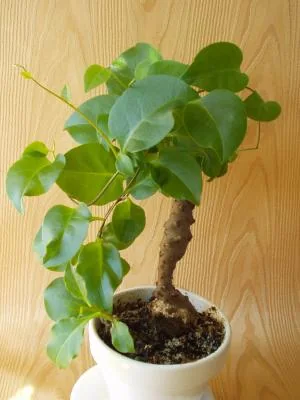
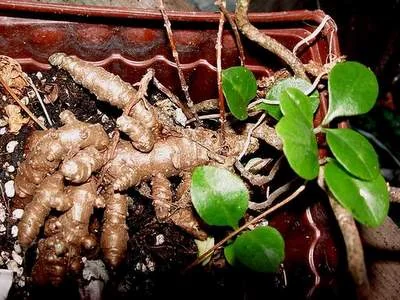
This member of the Basellaceae family was given this name by Carl Friedrich von Gaertner in 1807. It is found in Bahamas, Belize, Cayman Islands, Colombia, Costa Rica, Cuba, Dominican Republic, El Salvador, Guatemala, Haiti, Honduras, Jamaica, Leeward Islands, Mexico, Netherlands Antilles, Nicaragua, Panamá, Puerto Rico, S USA, Trinidad-Tobago, Venezuela and Windward Islands, growing in a rich but well drained soil with lots of water and some to lots of sun. The rhizomes can grow to three centimetres in diameter, the entire plant to eight metres in height. The flowers are cream-colored. Sub-family: Anredereae. The genera from the Spanish word enredadera which refers to a twining or climbing plant.
The species name from Latin; vesica; 'blatter ' and New Latin - aria; 'air'. Must be for the light leaves. Young plant from Tramil.net. The airbulbs from Eattheweeds.com.
Flower
Cream-Colour
Soil
Rich
Water
Maximum
Sun
Medium - Maximum