ANISODUS TANGUTICUS
Author:
Adolph Pascher, 1909
Family:
SOLANACEAE
Origin:
Elevation:
Publisher:
Pascher. (1909). In: Repert. Spec. Nov. Regni Veg. 7: 167.
Collection number:
placeholder
Thickness:
5 Centimetres
Height:
80-100 Centimetres
Propagate:
Seeds
CITES:
Synonyms:
Scopolia tangutica, Carl Johann Maximowicz, 1881.
Anisodus tanguticus var. viridulus, C.Y.Wu & C.Chen.
Scopolina tangutica, Kuntze.
Whitleya tangutica, Sandina.
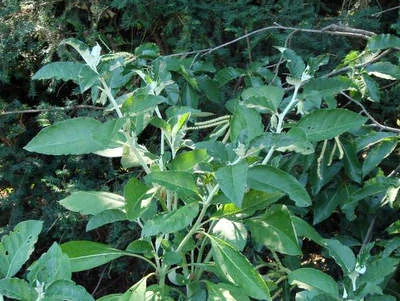
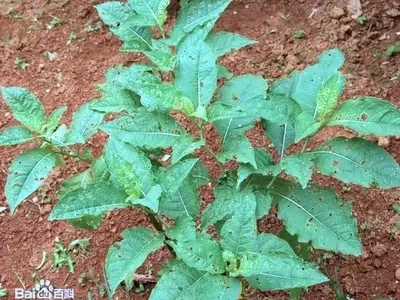
This member of the Solanaceae family was given this name by Adolph Pascher in 1909. It is found from the Hengduan Mountains of Sichuan and Yunnan in the east, through Qinghai and Gansu in the northwest, Tibet in the west, and Nepal in the south, from altitudes of 2,800 to 4,200 metres. It is growing in a drained, but sometime rich soil with quite some water and some to lots of sun. The caudex can grow to five centimetres in diameter, the entire plant to 80 or even 100 centimetres in height. The flowers are yellow-green to dark purple.
The genera name is a compound of the Greek words ἄνισος;´ ánisos: 'unequal' and ὀδούς odoús, 'tooth', hence signifying 'having teeth of different lengths' – so called from the observation that certain species have calyces featuring lobes or teeth of unequal length. The specific name tanguticus is a geographical epithet, signifying 'belonging to the Tangut region' i.e. 'growing in the land of the Tangut people'. A purple flower from Swild.cn.
Flower
Yellow-Green - Purple - Dark-Purple
Soil
Mix - Rich
Water
Medium - Maximum
Sun
Medium - Maximum