ANISODUS LURIDUS
Author:
Curt Polycarp J. Sprengel, 1824
Family:
SOLANACEAE
Origin:
Elevation:
Publisher:
Don, G. (1830). In: Loudon, Hort. Brit.: 61.
Collection number:
placeholder
Thickness:
4 Centimetres
Height:
50-120 Centimetres
Propagate:
Seeds
CITES:
Synonyms:
Might be: Anisodus stramonifolius, G. Don, 1830.
Physalis stramonifolia, Wall. 1824.
Whitleya stramonifolia, Sweet, 1825.
Scopolia lurida, Dunal, 1852.
Anisodus fischerianus, Pascher, 1909.
Show more (8)
Nicandra anomala, Link & Otto, 1855.
Scopolia mairei, H. Lév. 1915.
Scopolia anomala, Airy Shaw, 1937.
Scopolia stramonifolia, Shrestha, 1969.
Anisodus mairei, C.Y.Wu&C.Chen, 1977.
Anisodus anomalus, V.S.Kumar.
Hyoscyamus luridus, E.H.L.Krause.
Scopolina stemonifolia, Kuntze.
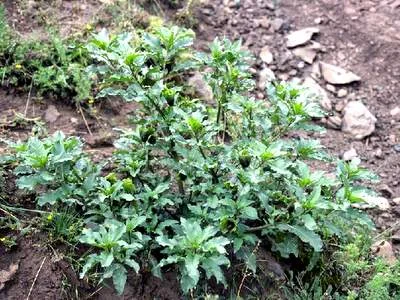
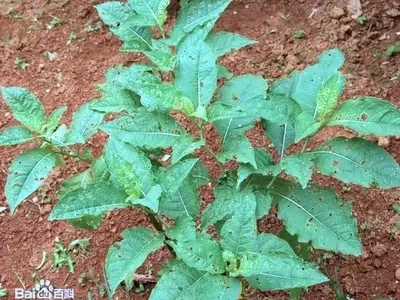
This member of the Solanaceae family was given this name by Curt Polycarp Joachim Sprengel in 1824. It is found in Bhutan, China, India and Nepal, growing in a rich soil with quite some water and some sun. The swollen root can grow to four centimetres in diameter, the entire plant from 50 to 120centimetres in height. The flowers are pale yellow-green, and can have some brownish-purple markings.
The genera name is a compound of the Greek words ἄνισος;´ ánisos: 'unequal' and ὀδούς odoús, 'tooth', hence signifying 'having teeth of different lengths' – so called from the observation that certain species have calyces featuring lobes or teeth of unequal length. The species' name means 'pale yellow', for the flowers. And a dark one from Spezialplant.nu. And a brownish-purple from Botany.cz.
Flower
Pale Yellow-Green - Brownish-Purple
Soil
Rich
Water
Medium - Maximum
Sun
Medium - Maximum