ADENIA WILMSII
Author:
Hermann A. Theodor Harms, 1899
Family:
PASSIFLORACEAE
Origin:
Elevation:
Publisher:
Harms. (1899). In: Bot. Jahrb. Syst. 26: 238.
Collection number:
placeholder
Thickness:
20 Centimetres
Height:
20-50 Centimetres
Propagate:
Seeds
CITES:
Synonyms:
–
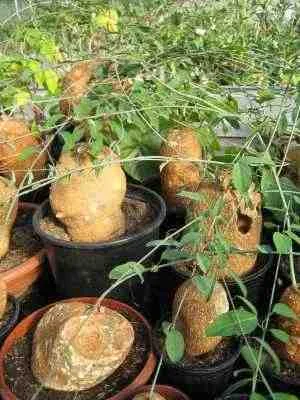
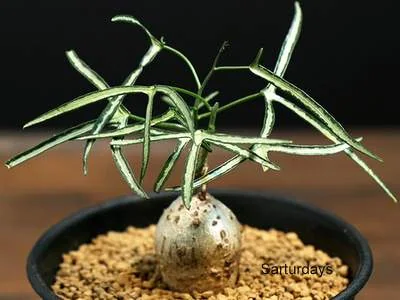
This member of the Passifloraceae family was given this name by Hermann August Theodor Harms in 1899. It is only found in a few locations in the north-eastern South Africa, where only a few plants are locate: Please; don't buy wild plants! It is growing in a well drained loamy soil or gravel, among rocks with some water and some sun. The caudex can grow to 20 centimetres in diameter, the entire plant from 20 to 50 centimetres in height. The flowers are white to cream colured. It grows between 1300 and 1500 metres above sea level. Like the close related A. huillensis from Angola, it lack the tendrils on the stems. In contrast to A. huillensis, A. wilmsii has leaves that are divided with a rounded outline.
The name Adenia is derived from aden, meaning gland, and pertains to the glands found on leaves of most of the species.
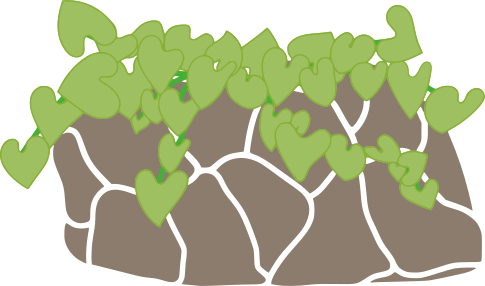
The species name after Friedrich Wilms, 1848-1919, a German apothecary, botanical collector and traveller. In 1883, he went on a 13 year collection tour to Africa. He actually collected this plant. The leaves by M. Lötter, Redlist.sanbi.org.
Flower
White - Cream
Soil
Gravel - Mix
Water
Medium
Sun
Medium